TLDR
This was the week Washington’s Latin America policy went from pressure campaign to open confrontation. The Pentagon is ramping up military planning for Cuba. Trump openly suggested he’d “stop by Cuba” after Iran. The World Bank reopened its doors to Venezuela’s puppet government. And the U.S. slapped sanctions directly on Ortega’s sons in Nicaragua. Every communist regime in the hemisphere got hit this week — and none of them can say they didn’t see it coming.
The Week the Gloves Came Off
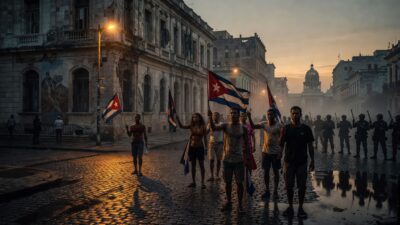
If you’ve been following Latin America’s three-ring socialist circus — Cuba, Venezuela, Nicaragua — this was the week the audience stopped clapping and started booing. Every single dictatorship on the list took body blows from Washington, and they took them in the exact same way they always do: by blaming America for problems they created themselves.
My dad fled Cuba. My mom fled Nicaragua. Growing up, they never sugarcoated what life was like under these regimes. They didn’t flee capitalism. They didn’t flee freedom. They fled the exact systems that Castro, Chávez/Maduro, and Ortega built — and that their apologists in Western universities still romanticize from their air-conditioned offices.
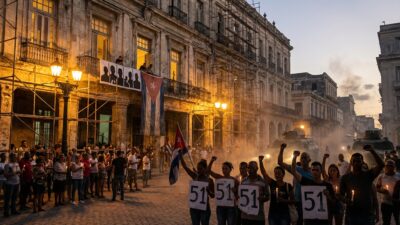
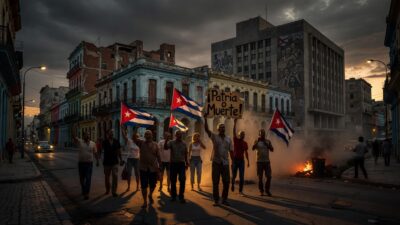
So no, I don’t have a lot of patience for Díaz-Canel’s “we are besieged, not failed” speech this week. You know who’s besieged? The 11 million Cubans who can’t find fuel, can’t get garbage collected, and get threatened with prison for complaining about it. That’s who.
Cuba: Pentagon Plans, Díaz-Canel Whines
The biggest story of the week dropped on Tuesday: USA TODAY reported the Pentagon has ramped up planning for possible military operations in Cuba. This isn’t speculation — this is sourced from multiple officials familiar with the planning.
Trump himself fanned the flames. At the White House on April 13, he told reporters: “We may stop by Cuba after we’re finished with this,” — referring to the ongoing conflict with Iran. And in earlier remarks, he said he expects to have the “honor” of “taking Cuba, in some form,” adding: “Whether I free it, take it — I think I can do anything I want with it.” (NYT)
Meanwhile, the island is falling apart. Only 44 of Havana’s 106 garbage trucks are still running due to fuel shortages, according to Reuters citing Cubadebate. Waste is literally piling up on street corners. Canadian mining giant Sherritt announced it’s pausing operations at its Moa facility.
And what did Cuba’s “president” do? He gave a defiant speech on April 16 marking the 65th anniversary of Fidel Castro’s declaration of socialism. “The moment is extremely challenging and calls upon us once again to be ready to confront serious threats, including military aggression,” Díaz-Canel told the crowd. The regime’s May Day slogan is now “The Homeland is Defended” — with what, exactly? Broken garbage trucks and Russian oil deliveries that may or may not arrive?
Earlier in the week, Díaz-Canel went on Meet the Press and blamed the U.S. energy blockade for Cuba’s economic crisis — while refusing to acknowledge six decades of communist economic mismanagement. Military.com reported that Cuba has warned a U.S. attack is “possible” while the Pentagon refused to comment on military prospects.
For context on how we got here, read our earlier coverage on Trump’s Cuba siege, the blackout apocalypse, and why Cuba’s geography matters.
Venezuela: The World Bank Opens the Door
In the most quietly significant development of the week, the World Bank announced it is resuming dealings with Venezuela — under the “acting presidency” of Delcy Rodríguez. Dealings were paused in 2019. The last loan was in 2005. That’s a 21-year gap, and the fact that the international financial system is now treating Rodríguez’s government as legitimate tells you everything about where this is heading.
The U.S. Treasury followed up by lifting sanctions on Venezuelan financial institutions, including the Central Bank. General License 56, issued April 14, now authorizes “commercial-related negotiations of contingent contracts with the Government of Venezuela.” Translation: Washington is opening the door for oil deals — carefully, with conditions.
Reuters reported that Spain’s Repsol is moving to gain control of Venezuelan oil operations, and Rodríguez is publicly calling for full sanction removal, saying “licenses are not enough.” The chess game continues.
But not everything is going according to plan. The top U.S. diplomat in Venezuela, Laura Dogu, abruptly left her post — just three months after arriving and reopening the embassy in Caracas. She’s being replaced by John Barrett, currently serving in Guatemala. That kind of rapid turnover raises serious questions about whether Washington actually has a coherent strategy in Venezuela or is just winging it.
Meanwhile, Amnesty International warned that Venezuela’s amnesty law — meant to free political prisoners — could become “a mechanism of repression” if implemented with discretionary criteria. And on the streets of Caracas, retirees and public sector workers marched toward the presidential palace demanding higher wages, only to be blocked by police.
For background on the Maduro takedown and Delcy’s power play, see our coverage of Venezuela’s dangerous chess and the Maduro takedown.
Nicaragua: Sanctions Hit the Ortega Family Directly
The U.S. Treasury sanctioned two of Ortega and Murillo’s sons on Thursday, along with five other individuals and seven companies tied to the country’s gold industry. The sanctions specifically target the regime’s corrupt control over Nicaragua’s mining sector, including the forcible seizure of a U.S.-invested gold processing site owned by BHMB Mining Nicaragua S.A.
Reuters noted that the U.S. has been pressuring Managua under both Biden and Trump, dating back to Ortega’s violent crackdown on mass demonstrations in April 2018. The United Nations last year accused dozens of Ortega officials of serious human rights violations in what it called a “tightly coordinated system of repression.”
The gold sector is a critical revenue stream for the regime. By sanctioning the sons and the companies, Washington is going after the Ortega family’s personal wealth — not just the state apparatus. That’s a different kind of pressure, and it signals that the Trump administration views Nicaragua not as a secondary concern, but as an active target.
Adding to the regime’s PR problems, exiled Nicaraguan Bishop Silvio Báez spoke out in Miami, denouncing the “false peace” that “dictators seek to impose through fear and weapons.” Báez has become one of the most powerful voices against the regime from abroad — and his words carry weight in a country that is still overwhelmingly Catholic.
For our earlier analysis of Ortega’s war on his own people, check Ortega’s Brutal Betrayal and Ortega’s Citizenship Trap.
The Broader Picture: Trump’s Monroe Doctrine in Action
This wasn’t just about three countries. The Trump administration’s Latin America policy is now operating on multiple fronts simultaneously:
- Brazil: ICE arrested — and then released — Alexandre Ramagem, a fugitive Bolsonaro ally convicted for the 2023 coup attempt. The incident sparked a diplomatic row. (AS/COA)
- Drug War: U.S. military strikes on alleged drug boats in the Eastern Pacific killed five people. Trump has declared the U.S. is in “armed conflict” with cartels. (NPR)
- Peru: The presidential election on April 12 saw pro-Trump candidate Rafael López Aliaga lose ground to leftist Roberto Sánchez Palomino. Keiko Fujimori leads with ~17%. Trump’s Monroe Doctrine rhetoric is not popular in the region. (Reuters)
- Senate Pressure: Sen. Rick Scott wrote to Trump on April 14 urging further action on Cuba, specifically targeting foreign nations that “build with” the communist regime. (Scott letter)
The pattern is unmistakable: Washington is using every lever — sanctions, diplomacy, military threats, economic pressure — to reshape its hemisphere. Whether you call it the Monroe Doctrine reborn or the “Donroe Doctrine” (as some wags have dubbed it), the intent is clear: alignment or consequences. (CNN)
Weekly Events Comparison
| Country | Key Event | U.S. Action | Regime Response |
|---|---|---|---|
| Cuba | Pentagon ramps up military planning | Energy blockade; Trump hints post-Iran action | Díaz-Canel defiant speech; May Day militarism |
| Venezuela | World Bank resumes dealings | Sanctions lifted on Central Bank; new licenses | Rodríguez demands more; Repsol moves in |
| Nicaragua | U.S. sanctions Ortega’s sons, gold sector | Treasury targets family wealth + 7 companies | Silence (so far) |
| Brazil | ICE arrests/releases Bolsonaro ally Ramagem | Diplomatic row over coup-convicted fugitive | Lula government pushes back |
| Peru | Presidential election — no clear winner | Pro-Trump candidate López Aliaga falters | Runoff expected June 7 |
| Drug War | Strikes on drug boats kill 5 | “Armed conflict” with cartels declared | Regional condemnation |
What to Watch Next Week
- Cuba: Will Trump follow through on “stopping by” Cuba? The Pentagon planning suggests this isn’t just bluster. Watch for any military deployments to the Caribbean.
- Venezuela: The Repsol oil deal and Rodríguez’s negotiating posture. Will the U.S. condition further sanctions relief on political reforms, or is this pure realpolitik?
- Nicaragua: Ortega’s response to the gold-sector sanctions. Does he escalate or quietly negotiate?
- Peru: Election counting continues. The June 7 runoff field is still taking shape — and it matters for U.S. regional alignment.
- May 1: Cuba’s militarized May Day celebrations. Expect regime propaganda dialed to 11.
FAQ
Q: Is the U.S. really going to invade Cuba?
A: “Invade” is a strong word, but the Pentagon is clearly planning for contingencies. Trump’s rhetoric is aggressive, the energy blockade is already causing humanitarian crisis, and the military planning reported by USA TODAY is real. Whether it’s a negotiating tactic or genuine preparation, we’ll find out soon.
Q: Why is the World Bank resuming dealings with Venezuela?
A: The IMF conducted a polling process among member nations, and the result was to recognize Rodríguez’s government. This reflects a pragmatic shift — the international community is moving toward engagement rather than isolation, even as the political situation remains deeply problematic.
Q: What do the Nicaragua gold sanctions actually do?
A: They freeze U.S.-based assets and prohibit transactions with the sanctioned individuals and companies. Since Nicaragua’s gold sector uses U.S. dollar-denominated transactions, this effectively cuts off that revenue stream from the international financial system.
Q: How does Peru’s election affect U.S. Latin America policy?
A: Trump wants aligned governments across the hemisphere. A López Aliaga victory would have been a significant win; his declining support suggests that Trump’s heavy-handed approach is actually backfiring with Latin American voters.
Jonathan Alonso is the founder of Luna de Fresa. His father’s family fled Cuba and his mother’s family fled Nicaragua. He writes about Latin American politics from the perspective of someone who grew up hearing — firsthand — what socialism actually does to families.