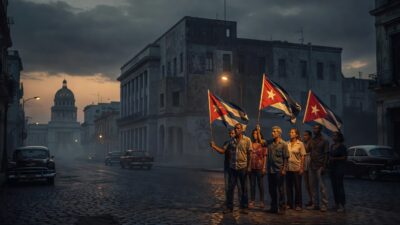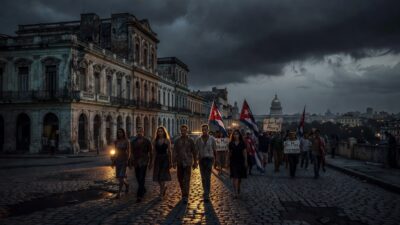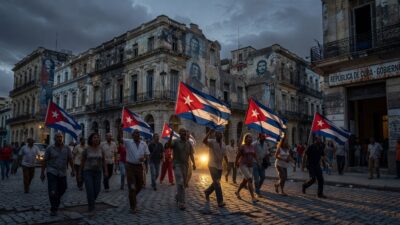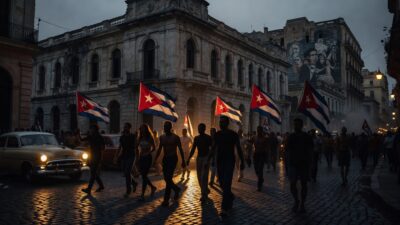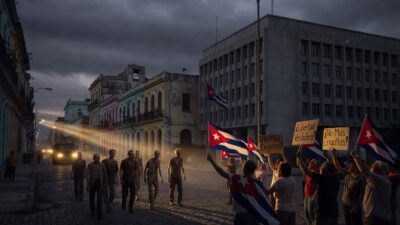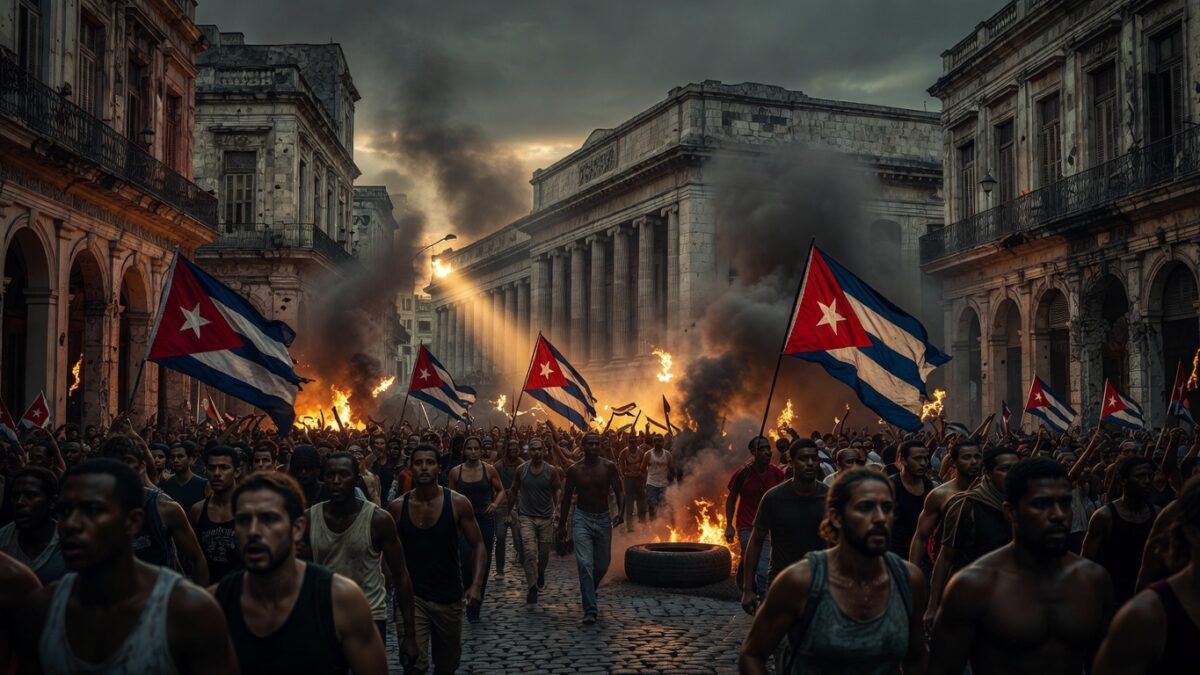
I’ve heard the stories my father told me about Cuba my entire life, but nothing prepared me for witnessing this moment of historical transformation. The streets are erupting with a fury that signals something profound: the communist regime is finally crumbling.
What we’re seeing isn’t just protest—it’s a nationwide awakening. When citizens start banging pots and pans in the streets, breaking through decades of enforced silence, you know something fundamental has changed. The government’s machinery of control is fracturing.
The Breaking Point of Oppression
Nationwide blackouts have become the perfect metaphor for communist failure. The Catholic Church has already sounded the alarm about the humanitarian crisis consuming the island. Eleven million Cubans are experiencing a darkness that goes far beyond electrical infrastructure—it’s the darkness of political repression.
When a regime can’t even keep the lights on, its days are numbered.
My family’s history has prepared me to understand these moments. The current administration has made it clear that Cuba’s president must go. This isn’t just diplomatic posturing—it’s recognition of a fundamental shift happening on the ground.
The Economics of Collapse
Let’s be brutally honest: Cuba’s communist experiment has failed spectacularly. With Venezuela’s oil shipments halted and internal resources depleted, the regime is hanging by a thread. Over 650 protesters—including 40 courageous women—are directly challenging the communist party’s authority.
This isn’t just economic distress—it’s a complete systemic collapse. Hospitals without electricity, families without food, a generation without hope. But hope is precisely what’s emerging from these protests.
America’s Role in Liberation
The United States cannot—and should not—remain passive. As we’ve seen in Venezuela, strategic pressure can accelerate the fall of oppressive regimes. Diplomatic, economic, and political interventions can be the final push this popular movement needs.
Freedom is not begged for—it is seized. And Cuba stands at that transformative moment.
My father always said that dictatorships look strong until the moment they suddenly collapse. What we’re witnessing in Cuba is that precise, fragile moment of transformation—when fear gives way to collective courage.
The Human Cost of Communism
Behind every statistic is a human story of suffering and resilience. Families torn apart, dreams crushed, potential strangled by an ideology that promises equality but delivers only misery. But now, that desperation is becoming determination.
To every American who believes in freedom: Pay attention. What happens in Cuba doesn’t stay in Cuba. This is about the universal human desire to live with dignity, to choose one’s destiny.
A Call to Action
Share these stories. Support Cuban activists. Remind your representatives that freedom isn’t just an American value—it’s a human right. The communist regime in Cuba is not just failing—it is being dismantled by its own people, one protest, one blackout at a time.
Frequently Asked Questions
What is the most important thing to know about this topic?
Understanding the fundamentals and applying them consistently matters more than chasing shortcuts. Start with the basics, measure results, and iterate.
How long does it take to see results?
Most practitioners see measurable improvement within 60-90 days of implementing a consistent strategy.
What should I avoid?
Avoid tactics that prioritize short-term gains over long-term trust. Sustainable results come from quality and consistency.