TL;DR
- Cuba was the biggest story of the week: the regime admitted diesel and fuel oil supplies had effectively run dry, blackouts in Havana stretched as long as 20 to 22 hours, and protests broke out in the capital.
- Washington kept the pressure on Havana while also opening a narrow tactical channel: President Trump said Cuba was “seeking help,” the administration renewed a $100 million aid offer, and CIA Director John Ratcliffe made a rare visit to Havana.
- In Venezuela, the interim government is trying to look stable abroad, but the core moral test has not changed: political prisoners are still a live issue, and even sympathetic observers on X are warning that normalization means nothing if repression survives.
- In Nicaragua, Daniel Ortega and Rosario Murillo spent another week proving that socialism never stops at bad economics. It always reaches for the altar, the family, and the conscience. Religious persecution remains one of the clearest signs of the regime’s fear.
Week in Review
If you want the honest headline for this week in Latin America, here it is: the dictatorships are weaker than they look, but they are still dangerous enough to hurt millions of ordinary people on the way down.
My dad’s family fled Cuba. My mom fled Nicaragua. So when I read the excuses from regime apologists this week, I hear the same old script my family spent years warning me about: shortages are somebody else’s fault, repression is “security,” and every obvious failure is somehow spun into a moral indictment of America. That propaganda is getting harder to sell.
The strongest signal of the week came from Cuba. The island’s energy collapse moved from chronic misery to open breakdown. But the broader pattern mattered too. Venezuela kept trying to market “stability” while the political-prisoner issue refused to go away. Nicaragua kept escalating its war on the Church and civil society. And the United States, especially under President Trump and Secretary of State Marco Rubio, continued to frame Latin America policy around pressure, leverage, and visible regime accountability.
If you missed last week’s roundup, start with last Friday’s wrap. This week felt like a more intense sequel.
Cuba
Cuba dominated the week because the regime’s energy crisis stopped being something authorities could hide behind euphemisms. According to the Associated Press, the national grid suffered another major failure that cut power across eastern provinces while Havana residents were already enduring routine blackouts. A Reuters report said Cuba had run out of diesel and fuel oil, with some Havana neighborhoods seeing outages of 20 to 22 hours.
That matters for two reasons. First, this is not abstract “macroeconomic stress.” It is hospital care disrupted, food spoiled, sleep destroyed, transit broken, and patience exhausted. Second, it exposes how fragile the regime really is once outside subsidies tighten. Cuba’s rulers can still police and threaten people, but they cannot keep the lights on.
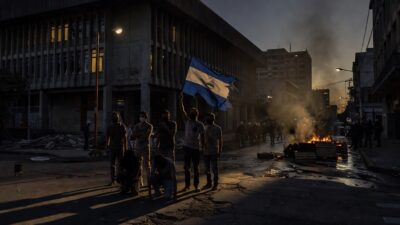
The public mood reflected that reality. On X, one of the more common themes was not ideological analysis but raw outrage: posts highlighted Havana’s 20-to-22-hour blackouts, street protests, and the sense that Cuba is running on fumes. That lines up with on-the-ground reporting from AP and Reuters describing pot-banging protests and burned trash bins in Havana.
Then came the geopolitical layer. BBC reporting confirmed a rare Havana meeting between CIA Director John Ratcliffe and Cuban officials after Washington renewed a $100 million U.S. aid offer and said Cuba was seeking help. The administration has tried to balance pressure with a humanitarian channel routed through the Catholic Church and other independent organizations rather than the regime itself. That is a smart distinction. Food and medicine for the Cuban people is not the same thing as giving the dictatorship another breathing tube.
What I keep coming back to is this: when the Left romanticizes socialism, they never have to sit in a sweltering apartment through a 22-hour blackout wondering whether an elderly relative will make it through the night. My father’s family knew what that kind of system does to human dignity. This week, Cuba showed it again.
For more on the pressure campaign, see Trump’s Cuba strategy and the regime’s collapse, why my family sees sanctions differently than the Left does, and our earlier look at how blackouts can become political breaking points.
Venezuela
Venezuela’s story this week was less explosive than Cuba’s but still revealing. The interim authorities and their U.S. partners are clearly trying to project forward motion. Reuters reported that President Trump said he would secure the release of all political prisoners in Venezuela. Around the same time, Reuters also reported that officials want a debt restructuring to bring Venezuela “out of the shadows” of the global financial system.
That is the right economic conversation to have eventually. But “eventually” cannot become an excuse for forgetting the victims who paid the price under chavismo. On X, the sharpest Venezuela sentiment this week was not triumphal. It was skeptical and impatient. One widely shared line came from activists insisting that Venezuela still has hundreds of political prisoners and that diplomatic normalization means nothing if those prisoners remain behind bars.
That skepticism is healthy. A country is not free because it learns to give prettier press conferences. A country is not healed because bondholders start talking about restructuring. And a post-Maduro story is not morally serious if it treats justice like a branding problem.
There was also a symbolic clash over sovereignty. AP reported on Delcy Rodríguez rejecting Trump’s comments about Venezuela becoming a “51st state” while speaking at the International Court of Justice during the Essequibo dispute with Guyana. That story mattered less for the headline gimmick than for what it revealed: even after the shock of regime change, Venezuela’s political class still wants to wrap itself in nationalist language while avoiding a deeper reckoning with the crimes and corruption that hollowed out the country in the first place.
If you want the backstory, revisit our coverage of Maduro’s capture and how Venezuela reached this turning point.
Nicaragua
Nicaragua was the clearest reminder that communist and socialist-authoritarian regimes do not just attack markets. They attack memory, faith, and independent authority.
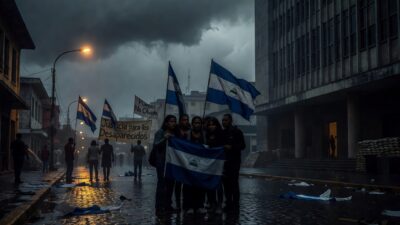
This week, USCIRF warned that the Ortega-Murillo regime continues an “unrelenting campaign” against religious freedom, using treason and sovereignty laws, arbitrary detention, NGO closures, and transnational repression to intimidate clergy, believers, indigenous communities, and exiles. Infovaticana added new reporting on permanent police surveillance of churches, priests being required to submit pastoral plans, and a broader crackdown on public religious expression.
That is exactly how brittle regimes behave. They do not merely want obedience. They want silence from every institution that can remind people they belong to something higher than the state.
My mom fled Nicaragua. So stories like this never read to me like distant foreign-policy abstractions. They read like warnings. Every time the regime surveils a Mass, blocks a procession, or pushes another priest into exile, it is announcing the same truth: Ortega and Murillo are terrified of any loyalty they cannot script.
X sentiment here was smaller but clear. The posts that surfaced most often focused on persecution of priests, exile, and the image of churches being monitored before Mass. That is not a sign of regime confidence. It is a sign of a government that sees even prayer as a threat.
Related reading: Marco Rubio’s pressure campaign on Nicaragua, Ortega’s constitutional assault on citizenship, and how the regime keeps hunting exiles beyond its borders.
U.S. Policy
The United States had a complicated but consequential week in the region. On Cuba, the administration kept sanctions pressure in place while signaling that humanitarian help is available if it can bypass the regime. On Venezuela, Trump publicly tied American credibility to the release of political prisoners. On Nicaragua, the policy environment still favors pressure, naming, and international isolation rather than fantasy diplomacy.
I think that is the right instinct. My family’s history makes me deeply suspicious of the bipartisan Washington habit of confusing access with success. The goal is not to collect meetings. The goal is to protect dissidents, weaken dictatorships, and keep U.S. policy morally legible to the people actually trapped under these systems.
That is why this week’s Cuba developments mattered so much. If Havana really wants help, then the Cuban people should receive it in ways the regime cannot weaponize. If Caracas wants legitimacy, release the prisoners first. If Managua wants to be treated like a normal government, stop treating the Church like an internal enemy.
For the broader strategic lens, read our look at Trump’s Latin American counteroffensive.
Weekly Comparison Table
| Country / Track | Biggest development | Why it matters | What to watch next week |
|---|---|---|---|
| Cuba | Fuel supplies effectively ran dry, blackouts intensified, protests flared in Havana, and U.S.-Cuba backchannel contact became public. | The regime’s basic governing capacity is visibly breaking down. | Whether aid talks move forward, whether the Church is allowed to distribute assistance, and whether blackouts trigger wider protests. |
| Venezuela | Trump promised to secure the release of political prisoners while officials pushed debt-restructuring and normalization language. | The fight is shifting from regime removal to whether justice and real liberalization actually follow. | Concrete prisoner releases, legal reforms, and whether financial normalization outruns political accountability. |
| Nicaragua | Fresh evidence showed expanded religious repression, surveillance of churches, and continued pressure on exiles and clergy. | The regime is tightening social control by targeting one of the last independent moral institutions in the country. | Whether Washington and international bodies escalate pressure over religious freedom and exile persecution. |
| U.S. policy | Pressure-first policy continued across Cuba, Venezuela, and Nicaragua, with limited openings tied to regime behavior. | The White House is trying to show that engagement is conditional, not naive. | Whether that conditionality stays firm or gets blurred by negotiation theater. |
What to Watch Next Week
Start with Cuba. If the lights keep going out and the regime cannot stabilize fuel deliveries, the real question becomes whether localized protests remain localized. That is when authoritarian governments make mistakes.
In Venezuela, watch for proof instead of promises. I want names, releases, and transparent accounting on prisoners before I take the normalization story seriously.
In Nicaragua, keep an eye on the Church. Ortega usually tells you what he fears by who he harasses. Right now, he fears organized faith, memory, and exile networks that refuse to shut up.
FAQ
Why was Cuba the biggest story of the week?
Because the crisis was no longer theoretical. Fuel shortages, grid collapse, blackouts, and protests all hit at once, while Washington openly discussed both pressure and humanitarian leverage.
Is Venezuela actually stabilizing?
Maybe financially, eventually. Politically and morally, that case is still unproven. A country with unresolved political-prisoner cases is not done cleaning house.
Why focus so much on religious freedom in Nicaragua?
Because regimes attack the Church when they want total control. It is one of the clearest indicators that the state is trying to eliminate any source of loyalty or truth outside the ruling family.