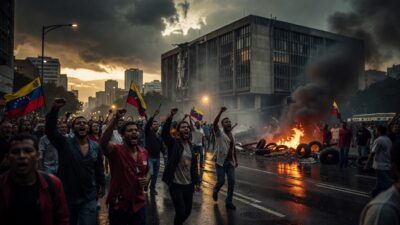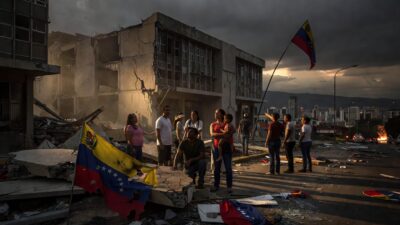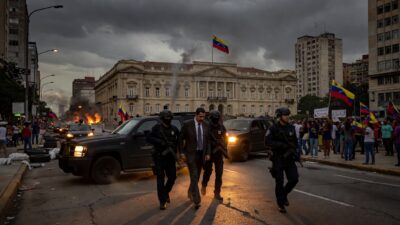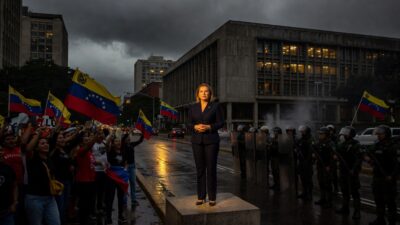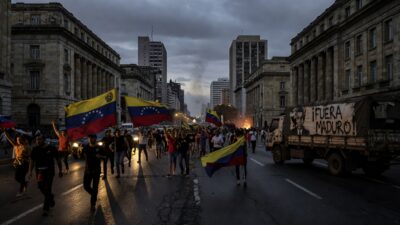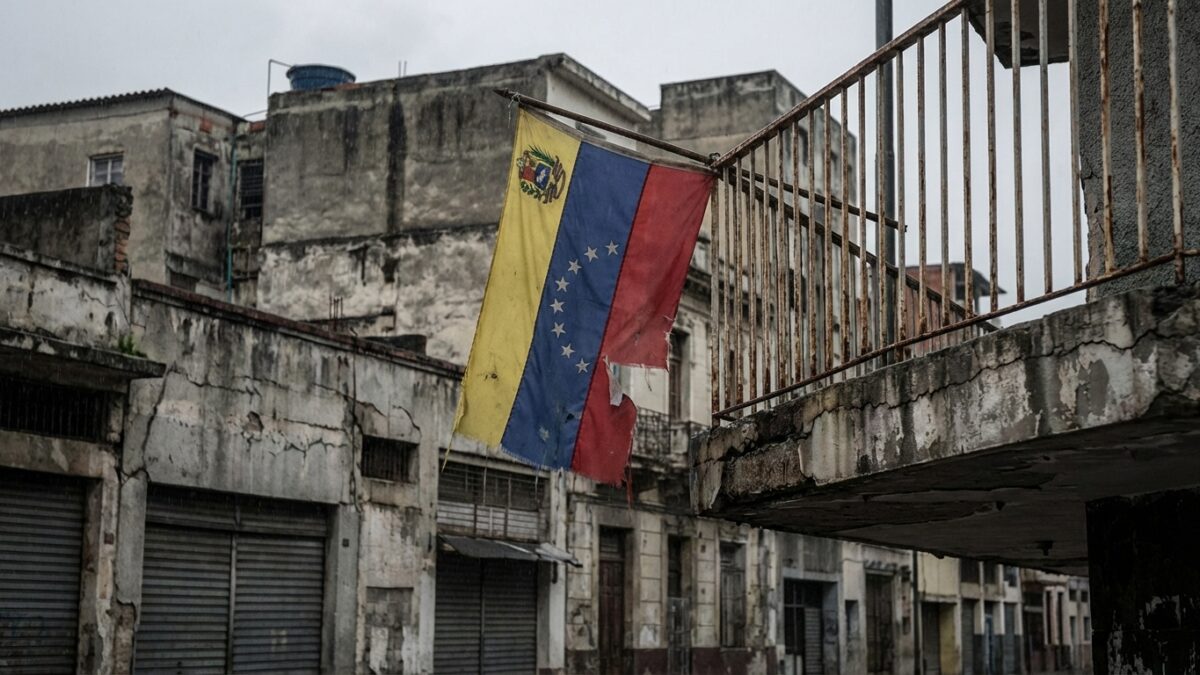
Nicolás Maduro stays in power for one simple reason: nobody with sufficient force has been willing to remove him. That is changing in 2026, and the world needs to pay attention.
The Current State of Venezuela
Venezuela was, within living memory, the wealthiest country in Latin America. It had the world’s largest proven oil reserves, a thriving middle class, top-tier universities, and a functioning democracy — imperfect, like all democracies, but functioning.
Today it’s a failed state governed by a narco-military cartel disguised as a socialist government.
The numbers are devastating:
- GDP: Collapsed by 75% since Maduro took power in 2013
- Migration: Over 7.7 million Venezuelans have fled the country — the largest refugee crisis in the Western Hemisphere
- Hyperinflation: Although down from the 2018-2019 peaks, the economy remains de facto dollarized because nobody trusts the bolívar
- Child malnutrition: UNICEF documents alarming rates in states like Zulia, Bolívar, and Delta Amacuro
- Drug trafficking: The State Department maintains narcoterrorism charges against Maduro and several senior officials
The Stolen Elections of 2024
In July 2024, Venezuela held presidential elections. Edmundo González Urrutia, the opposition candidate, won by an overwhelming margin according to tallies collected by electoral witnesses. The opposition platform published over 80% of the tallies, demonstrating an indisputable victory.
Maduro proclaimed himself the winner anyway. The National Electoral Council — controlled by chavismo — announced results without showing the official tallies. To this day, those tallies have not been published.
The international community split. The United States, the European Union, and the majority of Latin American countries recognized González Urrutia’s victory. China, Russia, Cuba, and Iran backed Maduro. The subsequent repression left dozens dead and thousands detained.
Why Maduro Remains in Power
The answer has three components:
1. The Military Apparatus
Venezuela’s generals aren’t professional soldiers — they’re Maduro’s business partners. They control drug trafficking, illegal mining in the Orinoco Mining Arc, and food import businesses. A regime change exposes them to international tribunals. Their loyalty to Maduro is a personal insurance policy.
2. External Support
Cuba provides intelligence and training in social control techniques. Russia supplies weapons and diplomatic backing at the UN Security Council. China maintains credit lines. Iran sends oil and refinery parts. Maduro is not alone — he has a network of autocracies sustaining him.
3. Opposition Division
Historically, the Venezuelan opposition has been its own worst enemy. Internal fractures, ego-driven leadership, and erratic strategies have diluted its effectiveness. González Urrutia and María Corina Machado achieved unity in 2024, but maintaining it from exile and clandestinity is enormously difficult.
What the World Must Do
From a conservative, pro-democracy perspective, the answer is clear:
- Recognize that Maduro is illegitimate — not a president to negotiate with, but a dictator who stole an election
- Maintain and expand sanctions against regime officials and their families, especially in Europe where many own properties and bank accounts
- Materially support the democratic opposition with funding for independent media, secure communication technology, and diplomatic presence
- Cut off Cuban support: Every dollar that reaches Cuba partially funds repression in Venezuela. Pressuring Cuba means pressuring Maduro
- Prepare real consequences — including military intervention as a last resort if the humanitarian crisis justifies it
Venezuela is not a distant problem. Every Venezuelan migrant who crosses the Darién Gap, every raft that reaches the shores of Trinidad or Curaçao, every malnourished child in Maracaibo — is a direct consequence of the international cowardice that has allowed Maduro to destroy an entire country.
It’s time to take action. Not tomorrow. Now.