TL;DR
After two months of silence, Nicaraguan dictator Daniel Ortega resurfaced on April 20 to call President Trump “mentally deranged” — the same day Washington sanctioned his own sons for looting the country’s gold reserves. With Rubio systematically dismantling the Ortega-Murillo regime’s financial networks, Nicaragua is looking more and more like the next domino after Venezuela. And Ortega knows it.
Ortega Loses His Cool — And That Tells You Everything
Here’s a rule of thumb for Latin American dictatorships: when a strongman starts publicly insulting the American president, it means the walls are closing in.
Daniel Ortega, Nicaragua’s self-appointed president-for-life, disappeared from public view for nearly two months. Fifty-five days of silence. No speeches. No appearances. Nicaraguans — especially the hundreds of thousands in exile — started whispering: is he sick? Is he dead? Is the regime finally cracking?
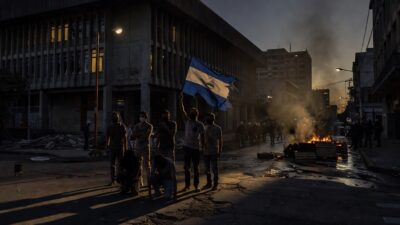
Then on April 20, the anniversary of the 2018 protests that left over 325 Nicaraguans dead at the hands of his own security forces, Ortega reappeared. And he was furious.
He called Trump “mentally deranged.” He said the American president had “lost his mind.” He ranted about Washington’s policies toward Cuba and Venezuela. The usual playbook — blame the yanquis, wrap yourself in sovereignty, pray nobody notices your family is stealing the country blind.
But here’s what triggered the meltdown: two days earlier, on April 16, the U.S. Treasury Department sanctioned five individuals and seven companies operating in Nicaragua’s gold sector — including Maurice Ortega and Daniel Edmundo Ortega, two of Ortega and Vice President Rosario Murillo’s own sons. Treasury Secretary Scott Bessent said Washington would continue targeting the financial networks sustaining the regime.
Then, on April 18 — deliberately chosen to mark the anniversary of the 2018 crackdown — Secretary of State Marco Rubio designated Vice Minister of the Interior Luis Roberto Cañas Novoa under Section 7031(c) for gross human rights violations. Cañas Novoa oversees the national police, prisons, and the entire internal security apparatus. He’s the guy who makes the torture happen.
Translation: Washington isn’t just going after the money anymore. They’re going after the people who make the regime run.
My Mom’s Country Doesn’t Make Headlines — That’s By Design
My mom fled Nicaragua. Not because she wanted to leave. Because staying wasn’t an option anymore. Her family lived through the Sandinista revolution — the original one, the one where Daniel Ortega first seized power with Soviet backing and Cuban advisors. The one where they nationalized everything, silenced the press, and turned a beautiful country into a police state.
Nicaragua never gets the attention Cuba or Venezuela gets. It’s smaller. It doesn’t have oil reserves or a dramatic migration crisis at the southern border. But what’s happening there is just as ugly — it’s just quieter. And that’s exactly how Ortega likes it.
The man has been in power since 2007, and before that he ran the country in the 1980s. He’s the caudillo who never left. His wife, Rosario Murillo, is the vice president — because why pretend you believe in democracy when you can just make your wife second-in-command? Their children control the gold exports, the media, the telecom infrastructure. It’s a family business. The product is oppression.
The Sanctions Timeline: How Washington Is Turning the Screws
| Date | Action | Significance |
|---|---|---|
| 2018–2025 | Gradual sanctions on Murillo, security chiefs, state businesses | Initial pressure phase |
| April 16, 2026 | Treasury sanctions 5 individuals + 7 gold companies (including Ortega’s sons) | Direct hit on regime’s economic lifeline |
| April 18, 2026 | Rubio designates VP Minister Cañas Novoa (Section 7031c) | Targeting the repressive apparatus itself |
| April 20, 2026 | Ortega resurfaces, calls Trump “mentally deranged” | Regime rattled, responding publicly |
The pattern is clear: first you squeeze the money, then you sanction the enforcers. It’s the same playbook that worked — or at least shook loose — Venezuela. The difference is Nicaragua doesn’t have the world’s largest oil reserves to create leverage. It has gold. And Washington just put that gold off-limits.
The Barcelona Summit: Socialists Circle the Wagons
As if on cue, the Latin American left held a summit in Barcelona this past week, hosted by Spain’s socialist Prime Minister Pedro Sánchez. Brazil’s Lula, Colombia’s Gustavo Petro, and Mexico’s Claudia Sheinbaum all showed up to talk about “defending democracy” — which is rich coming from leaders who have consistently refused to condemn the dictatorships in Cuba, Nicaragua, and Venezuela.
The summit was supposed to project strength. Instead, it exposed desperation. As Brazilian political analyst Sandra Bronzina told Fox News Digital: “We are, quite literally, living through times reminiscent of the fall of the Berlin Wall, specifically, the collapse of ’21st socialism’ across Hispanic America, and this is precisely what has them so worried.”
She’s right. Argentina has Milei slashing the state. Chile just elected Kast, its most conservative leader since Pinochet. El Salvador’s Bukele turned the hemisphere’s most dangerous country into one of its safest. Ecuador is cracking down on cartels. And now Trump is systematically dismantling the “Troika of Tyranny” — Cuba, Venezuela, and Nicaragua — one regime at a time.
The leftists in Barcelona aren’t gathering because they’re winning. They’re gathering because they’re losing.
The Gold Connection: How Ortega Funds His Dictatorship
Most people don’t associate Nicaragua with gold, but it’s the regime’s economic engine. After the international community started cutting off financial channels following the 2018 crackdown, Ortega pivoted hard to natural resources. Gold exports became the lifeline.
The sanctioned companies — seven of them — are directly tied to the extraction and commercialization of gold. Ortega’s sons weren’t just named as beneficiaries. They were running the operations. Maurice and Daniel Edmundo Ortega controlled significant portions of the gold trade, turning national resources into family trust funds.
By sanctioning these entities, the U.S. isn’t just punishing bad behavior. It’s cutting the jugular of regime financing. Without gold revenue, Ortega can’t pay his security forces. And without security forces, a dictator is just an old man in a palace.
Is Nicaragua Next?
That’s the question everyone in Managua is asking. After Maduro’s capture in Venezuela and Trump’s escalating oil blockade on Cuba, the Ortega regime has to be looking over its shoulder.
The April 18 sanctions on Cañas Novoa weren’t just punitive — they were strategic. By targeting the head of internal security, Washington is signaling that it knows exactly who runs the repression machine, and it’s coming for them individually. No more hiding behind state institutions.
As Latin Times reported, the fresh sanctions “signal a broader push after Venezuela and Cuba.” The Trump administration isn’t dealing with these regimes one at a time. It’s running a regional campaign.
My mom used to tell me stories about Nicaragua — about the beauty of the land, the warmth of the people, the devastation of revolution. She didn’t leave because she wanted adventure. She left because a socialist regime decided her family’s future belonged to the state.
Daniel Ortega has been running that same scam for decades. And for the first time in a long time, it looks like someone with real power is calling his bluff.
What Happens Next
Three things to watch:
1. Gold revenue collapse. With sanctioned companies and individuals, buyers will walk away from Nicaraguan gold. The regime’s cash flow is about to dry up — fast.
2. Internal fractures. When the money stops, loyalty gets expensive. Ortega’s security forces are loyal because they’re paid. Cut the paychecks, and you get cracks in the apparatus.
3. The exile community. Over 50,000 Nicaraguans fled after the 2018 protests alone, and hundreds of thousands more since. These aren’t passive refugees — they’re organized, angry, and watching Washington’s every move. They’re the domestic opposition that Ortega exiled but couldn’t silence.
Ortega can call Trump whatever he wants. Dictators always do. But names don’t stop sanctions. Names don’t rebuild stolen gold reserves. And names certainly don’t protect a dynasty that’s running out of money, allies, and time.
FAQ
Why did Ortega disappear for two months?
Nobody knows for certain. Speculation ranged from health problems to internal regime infighting. His reappearance on April 20 — timed to the anniversary of the 2018 protests — suggests he wanted to project strength. But a two-month absence from a man who controls everything suggests something significant happened behind closed doors.
What are Section 7031(c) sanctions?
Section 7031(c) is a State Department authority that bars foreign officials accused of gross human rights violations or significant corruption from entering the United States. It also extends to their immediate family members. It’s a targeted, personal sanction — not against a country, but against an individual and their household.
How important is gold to Nicaragua’s economy?
Gold is Nicaragua’s top export and a critical source of foreign currency. The regime has used gold revenues as an alternative to international financial channels that were cut off due to sanctions. By targeting the gold sector, the U.S. is striking at one of the regime’s last reliable revenue streams.
What was the 2018 Nicaraguan crisis?
In April 2018, protests erupted over social security cuts and tax increases. The regime responded with lethal force — national police and paramilitary groups killed over 325 people, wounded thousands, and forced over 52,000 into exile by December. It was the worst political violence in Nicaragua since the civil wars of the 1980s.
How does Nicaragua connect to Cuba and Venezuela?
Cuba, Venezuela, and Nicaragua form the “Troika of Tyranny” — a term coined during Trump’s first administration. Cuba provides ideological and intelligence support, Venezuela provides oil money (or did), and Nicaragua provides a strategic foothold in Central America. They prop each other up. Take one down, and the others get weaker.
Is the U.S. planning military intervention in Nicaragua?
There’s no indication of military intervention. The current strategy is economic and diplomatic: sanctions, asset freezes, travel bans, and international isolation. It’s the Venezuela playbook — squeeze until the regime cracks from within.